Merino Wool vs. Pima Cotton: What Your Shirts Are Made Of Actually Matters
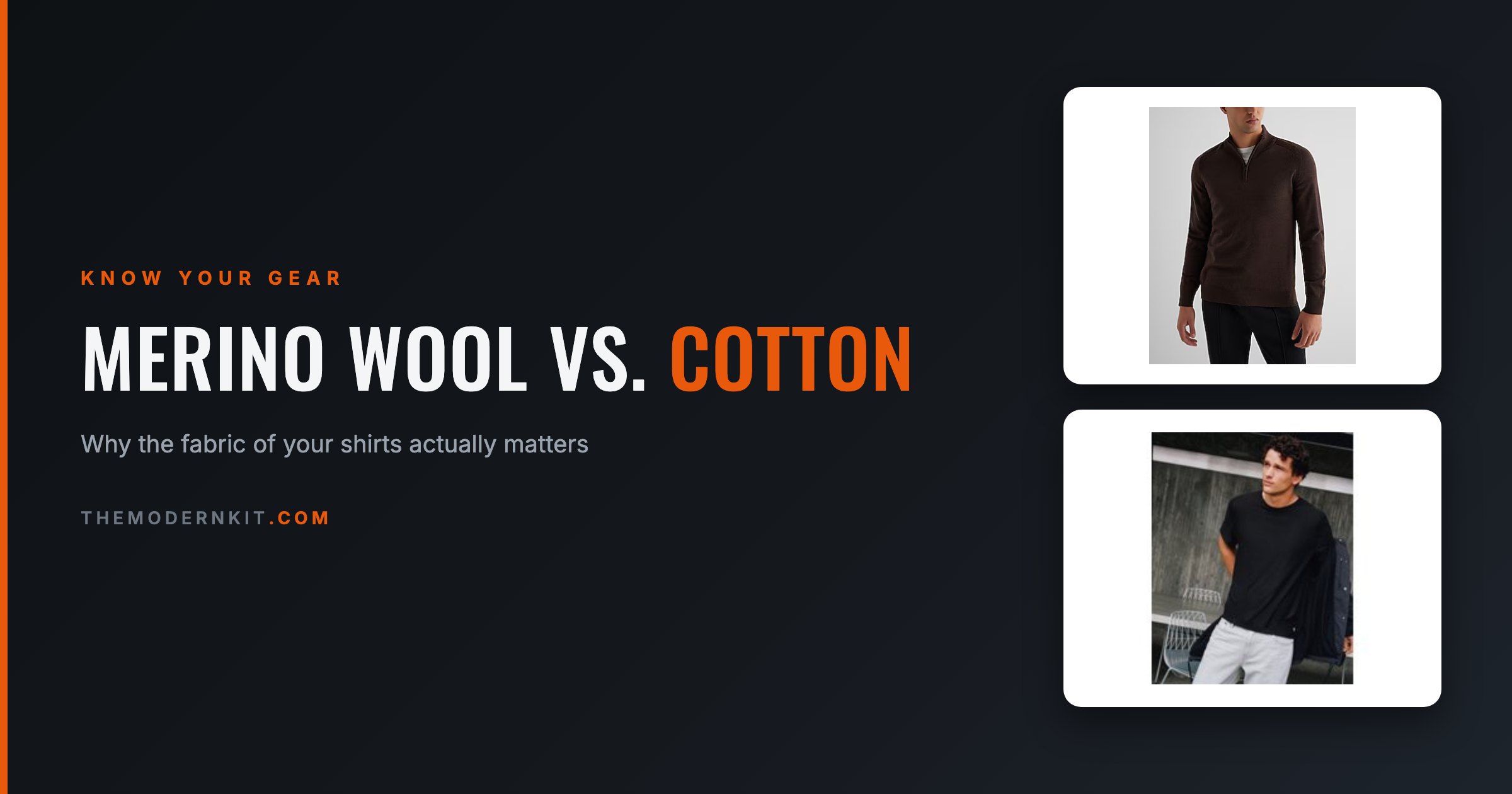
Quick answer: merino wool beats pima cotton for anything active, travel, or multi-day wear — it regulates temperature, resists odor for days, and dries in hours. Pima cotton is the best cotton money can buy — softer, stronger, and smoother than standard cotton — and it wins on price, hand-feel, and easy care for daily around-town wear. The smart wardrobe uses both: merino where performance matters, pima where comfort does.
Why fabric is the most underrated spec in menswear
Men agonize over fit and ignore fiber, but fabric decides how a shirt actually performs at 3pm: whether it’s clinging, smelling, or still looking pressed. The merino-vs-pima question comes down to what each fiber does with moisture — and that difference does not go away just because you upgraded your cotton.
What makes pima cotton different from regular cotton
Pima is extra-long-staple (ELS) cotton: individual fibers run about 1.4 inches or longer, against roughly 1.1 inches for the standard upland cotton in most tees. Longer staple means fewer fiber ends poking out of the yarn, which is why pima feels smoother, resists pilling, holds dye without going chalky, and survives more wash cycles before it looks tired. Supima is the trademarked name for pima grown in the U.S. — same fiber, verified origin. If you are buying cotton basics, pima is the upgrade worth paying for.
What pima does not change is chemistry. It is still cotton, so it still soaks up sweat and holds onto it.
What merino does that even pima can’t
Merino fibers absorb up to 30% of their weight in moisture vapor while still feeling dry, then release it — which is why a merino tee keeps you warm when it’s cool, cool when it’s warm, and stink-free after a full travel day. Odor-causing bacteria need the wet surface cotton provides; merino denies them the real estate. That’s why one merino piece can replace three cotton ones in a carry-on, no matter how nice the cotton is.
Where pima cotton still wins
Price, hand-feel, and durability in the wash. A good pima tee costs a third of merino, takes years of hot cycles and tumble drying that would wreck a wool knit, and feels genuinely luxurious in dry, air-conditioned life. Pima also drapes better in a polo or an oxford — it presses crisp in a way merino never quite does. Its failure mode is moisture: once wet, from sweat or rain, it stays wet, chills you, and holds smell until it’s washed.
How to build the split wardrobe
Put merino money where you sweat or travel: a merino quarter-zip is the single highest-leverage piece — office-appropriate, temperature-flexible, and immune to the overheated-conference-room problem. Put pima money into the shirts you wear most and wash most: tees, polos, and oxfords, where the softness and the fade resistance pay you back every week. For pure summer heat, a technical blend like the Vuori Strato Tech tee from our summer essentials splits the difference: synthetic speed-drying with a cotton hand-feel.
The Bottom Line
Pima for comfort, merino for performance, and never pay merino prices for a shirt that lives in air conditioning — that is exactly where pima earns its keep. One merino quarter-zip will teach you the difference in a week.
Frequently Asked Questions
Is pima cotton better than regular cotton?
Yes, for softness and longevity. Pima is extra-long-staple cotton — fibers around 1.4 inches versus roughly 1.1 for standard upland cotton — so the yarn is smoother, stronger, and far less prone to pilling and fading. It does not change how cotton handles sweat, though: pima absorbs and holds moisture the same way any cotton does.
Is merino wool itchy?
No — merino fibers are far finer than traditional wool (typically under 19 microns), which is below the threshold most skin registers as itch. Quality merino feels closer to soft cotton than to a winter sweater.
How often should you wash merino wool?
Every 3 to 5 wears is typical — merino’s odor resistance means airing it overnight is usually enough between washes. Wash cold on gentle and lay flat to dry. Pima cotton, by contrast, wants a wash after every sweaty wear.
Which is better for hot weather, merino or pima cotton?
Lightweight merino (150–180 gsm) wins when you’re moving or sweating, because it keeps releasing moisture instead of holding it. Pima cotton wins for still, dry heat — a pima polo in air conditioning feels better and costs a third as much.
This post contains affiliate links. If you buy through them, we may earn a small commission at no extra cost to you.