The Best Merino Wool T-Shirts of 2026: Unbound, Icebreaker, Smartwool and More
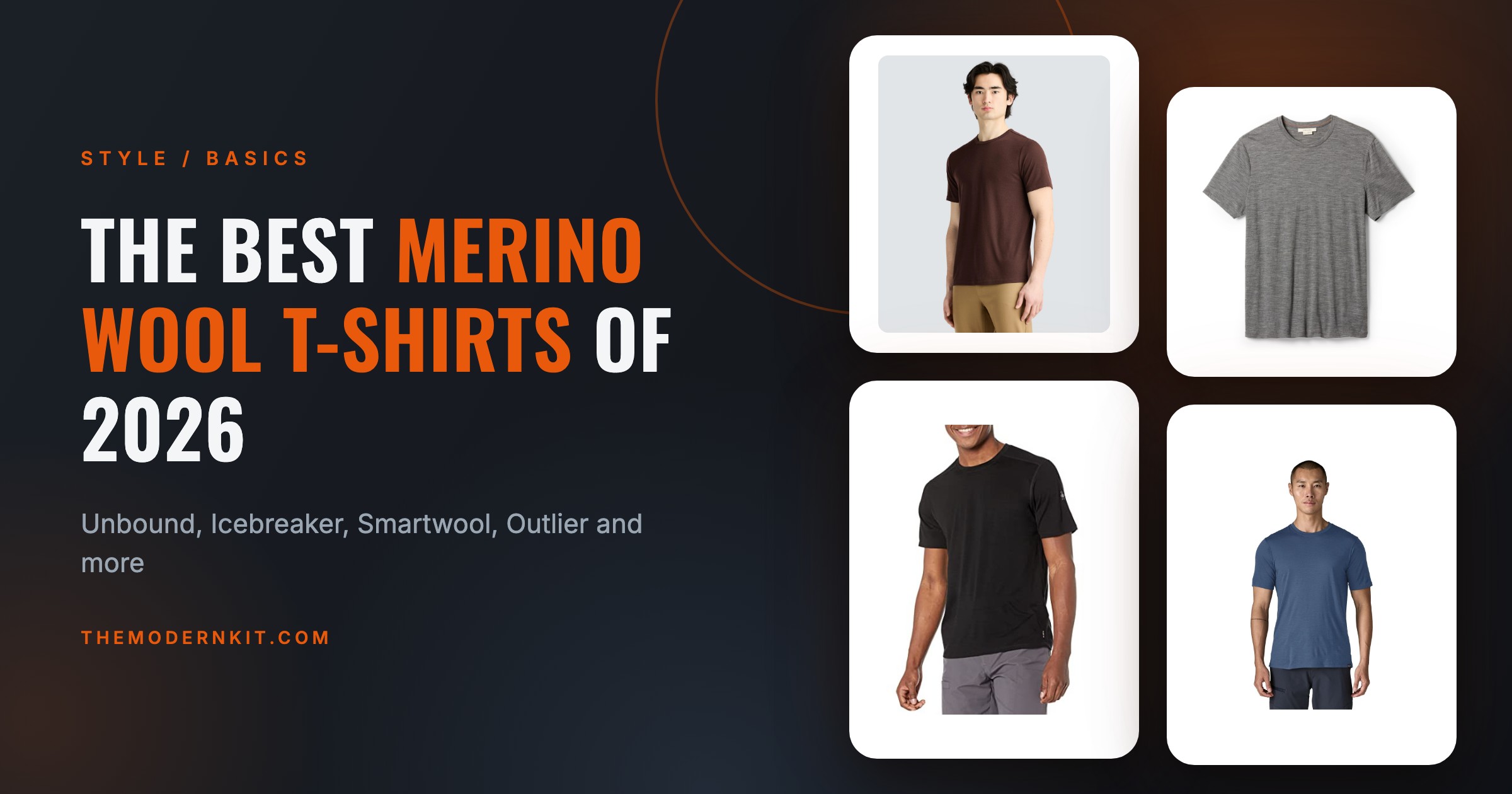
Quick answer: the best merino wool t-shirt for most men is the Unbound Merino Crew Neck: 100% 17.5-micron merino at 190 gsm, a clean slim fit, and enough weight that it does not look like a base layer. For hiking and hot weather, the lighter Icebreaker Merino 150 Tech Lite III. For the longest-lasting tee, the nylon-core Smartwool Merino Short Sleeve Tee. And if you want the softest merino tee made, the 16.5-micron Outlier Ultrafine Merino.
Our picks at a glance:
- Best Overall: Unbound Merino Crew Neck T-Shirt
- Best for Hiking and Hot Weather: Icebreaker Merino 150 Tech Lite III T-Shirt
- Most Durable: Smartwool Merino Short Sleeve Tee
- Best Splurge: Outlier Ultrafine Merino Cut One T-Shirt
- Best for Travel: Wool&Prince 100% Merino Wool Crew Neck Tee
- Best for Running: Patagonia Capilene Cool Merino Blend Shirt
- Best Value: Icebreaker Merino 175 Everyday Short Sleeve Crewe
A merino tee costs three to five times what a good cotton tee does, and the reason to pay it is what the fiber does with sweat. Merino absorbs moisture vapor into the fiber and keeps releasing it, so the shirt stays drier against your skin, resists odor for days, and dries in hours. That makes one merino tee worth three cotton ones in a carry-on. It also means you should not buy merino for a shirt that lives in air conditioning; our breakdown of merino wool vs. cotton explains where each fiber earns its price.
We compared three specs that decide how a merino tee wears. Fiber diameter (microns) decides softness: every shirt here with a published micron count is under 19, the range where merino stops feeling like wool. Fabric weight (gsm) decides use: 150 to 180 gsm is the hot-weather and active range, 190 gsm and up is the everyday range, with more drape and less sheerness. Blend decides durability: 100% merino is the softest and most odor resistant, while a nylon core or polyester blend trades a little of that for a shirt that holds up to more washes. We also read labels closely. Plenty of shirts sold as "merino" are mostly polyester, and Uniqlo, often the first stop for affordable merino, puts its 19.5-micron extra-fine merino into sweaters and a knit polo rather than a tee.
| Shirt | Fabric | Weight | Fiber | Price |
|---|---|---|---|---|
| Unbound Merino Crew Neck | 100% merino | 190 gsm | 17.5 micron | $65 |
| Icebreaker 150 Tech Lite III | 100% merino | 150 gsm | 18.9 micron | $90 |
| Smartwool Merino Short Sleeve Tee | 88% merino, 12% nylon core | Lightweight | Not published | $95 |
| Outlier Ultrafine Merino Cut One | 100% merino | 190 gsm | 16.5 micron (top capped) | $150 |
| Wool&Prince 100% Merino Crew | 100% merino | 190 gsm | 18.9 micron | $90 |
| Patagonia Capilene Cool Merino | 65% merino, 35% recycled polyester | Ultralight (3.5 oz shirt) | Not published | $75 |
| Icebreaker 175 Everyday | 100% merino | 175 gsm | Not published | $75 |
1. Unbound Merino Crew Neck T-Shirt: Best Overall
Unbound built its business on this shirt, and it has the review count to show for it: thousands of ratings averaging 4.8 out of 5. The fabric is 100% superfine 17.5-micron merino knit to 190 gsm, heavy enough to hang like a good cotton tee rather than cling like a base layer, and it resists wrinkles well enough to come out of a packing cube looking presentable. The fit is modern and slim without being tight, and Unbound also makes it in tall and relaxed cuts. Owners report some light pilling in the first few washes, which is normal for pure merino. If you are buying one merino tee to wear to dinner and on a plane, this is it. A five-pack brings the per-shirt price down. $65 at Unbound Merino.
2. Icebreaker Merino 150 Tech Lite III T-Shirt: Best for Hiking and Hot Weather
The Tech Lite is the tee outdoor people have worn for years, and the third version is still 100% merino, 18.9 microns, at 150 gsm. That lighter knit is the right weight for summer hikes, humid cities and hard exercise: it moves moisture fast and dries quickly, which is exactly the range our merino vs. cotton guide recommends for heat. Offset shoulder seams keep pack straps from rubbing on a seam. The tradeoff is durability and drape: 150 gsm pure merino is thinner, so it is more prone to small holes over time and a bit more see-through in light colors. It is widely stocked at REI, Nordstrom and Amazon, usually in a long list of colors. $90 at REI.
3. Smartwool Merino Short Sleeve Tee: Most Durable
Smartwool wraps its merino around a thin nylon core (88% merino, 12% nylon), so your skin touches only wool while the nylon adds tensile strength and a bit of stretch. That construction is why this tee shrugs off the tiny holes and early thinning that pure lightweight merino is known for, and why it tends to be the one people own for five years. It feels slightly less luxurious than 100% merino and reviewers note some pilling after washes, but it is the easiest pick here to live with: machine wash, hang dry, repeat. For a first merino tee you plan to wear hard, it is the safe choice. $95 at Amazon.
4. Outlier Ultrafine Merino Cut One T-Shirt: Best Splurge
Outlier's Ultrafine is the softest merino tee most people will ever wear. The current version moved to 16.5-micron merino that is top capped, meaning 16.5 is the maximum fiber diameter rather than an average, which is why it feels closer to fine cotton than to wool. It is knit to 190 gsm in a classic straight cut and, since late 2025, made in Portugal. Pack Hacker's long-term testing found minimal pilling, which justifies some of the price. It is also $150 for a t-shirt, sold mostly direct, and it can shrink modestly on the first wash. Buy it if you already know you love merino and want the best version of it. About $150 from Outlier.
5. Wool&Prince 100% Merino Wool Crew Neck Tee: Best for Travel
Wool&Prince is the menswear side of wool&, the brand famous for its 100-day wear challenge, and its 100% merino crew is built for exactly that kind of use. The 190 gsm fabric uses 18.9-micron merino spun with a compact yarn process that improves durability and resists pilling, and it is wrinkle resistant and quick drying. Care is simple: machine wash cold, line dry. It is a little looser and more casual in cut than the Unbound. Pick it if you want a single shirt that you can wear for a week of travel, air out overnight, and wear again. About $90 from Wool&Prince.
6. Patagonia Capilene Cool Merino Blend Shirt: Best for Running
Patagonia's Capilene Cool Merino blends 65% RWS-certified merino with 35% recycled polyester, and the result is a shirt that weighs about 3.5 ounces and dries faster than any pure merino tee here. That makes it the pick for running, cycling and summer trail days where you sweat through a shirt in an hour. The polyester also helps the fabric survive frequent washing. Reviewers note it is thinner than most, so it reads as athletic wear rather than something to wear to dinner, and a blend will not resist odor quite as long as 100% wool. It is sewn in a Fair Trade Certified factory. $75 at Backcountry.
Shop the Capilene Cool Merino →
7. Icebreaker Merino 175 Everyday Short Sleeve Crewe: Best Value
Icebreaker sells the 175 Everyday as a base layer, but it is a 100% merino crew-neck tee at 175 gsm, right in the middle of the weight range, and it costs about $75 at full price. It is regularly discounted at Amazon and outdoor retailers, which is how most people buy it. The fit is closer to the body than a fashion tee, so size up if you want it to hang loosely. Wear it alone in spring and fall or under a flannel in winter. It will not drape like the Unbound or the Outlier, but as a way to try pure merino for less, it is hard to beat. $75 at Icebreaker US.
Pure merino, blends or synthetics?
A polyester tech tee costs less, dries even faster and almost never gets a hole, so why bother with wool at all? Odor. Synthetic fabric gives bacteria a surface to live on, which is why a polyester running shirt can smell after one workout while a merino tee often goes several days. Merino also handles a wider temperature range: it stays comfortable in a cool morning and a warm afternoon, where polyester feels clammy in the first and sticky in the second.
Blends are the honest middle. The Smartwool tee keeps merino against your skin and hides nylon in the core of each yarn for strength. The Patagonia goes further, with roughly a third polyester, and gains drying speed and wash durability at the cost of some odor resistance. Pure merino (Unbound, Icebreaker, Outlier, Wool&Prince) is the choice when you want the longest time between washes and the softest hand, and you are willing to treat it a little more gently. For travel, where the whole point is packing fewer shirts, we lean pure merino. For training and daily hard use, a blend. Our guide to merino wool vs. cotton covers where cotton still fits in.
How to choose a merino t-shirt
- Weight for climate. 150 to 180 gsm for heat and exercise; 190 gsm and up for everyday wear, better drape and less see-through.
- Microns for softness. Under 19 microns will not itch for most people. Around 17.5 and finer feels closer to fine cotton than to wool.
- Blend for durability. A nylon core (Smartwool) or polyester blend (Patagonia) lasts longer and dries faster; 100% merino is softer and fights odor longer.
- Read the label. If merino is not the first fiber listed, you are buying a synthetic shirt with some wool in it.
- Care is part of the price. Wash cold on gentle every 3 to 5 wears, dry flat or on a line, and never use a hot dryer. Our merino wool vs. cotton guide covers why merino can go so long between washes.
The Bottom Line
Start with the Unbound Merino Crew Neck if you want one merino tee that looks like a normal t-shirt and travels like a technical one. Go lighter with the Icebreaker Tech Lite III for summer and trails, and choose the Smartwool Merino Short Sleeve Tee if you are hard on clothes. Keep your pima cotton tees for the office and the couch; our guide to merino vs. cotton explains why the two belong in the same drawer.
Keep reading: Merino wool vs. cotton | Summer style essentials | The best dopp kits | The one-bag travel packing list
Frequently Asked Questions
Are merino wool t-shirts worth the money?
For travel, hiking and hot, sweaty days, yes. A merino tee resists odor for several wears, keeps releasing moisture instead of holding it, and dries in hours, so one can replace two or three cotton shirts in a bag. For a shirt that lives in air conditioning, a good pima cotton tee is the better value.
How many days can you wear a merino t-shirt?
Most people get three to five wears between washes, and on trips some go longer by airing the shirt out overnight. Merino resists odor because it does not stay wet the way cotton does. Wash it cold on a gentle cycle and dry it flat or on a line once it stops smelling fresh.
Does merino wool shrink in the wash?
It can if it gets hot. Washing on cold and drying flat or on a line keeps a merino tee its original size, while a hot wash or hot tumble dry can shrink and felt it. Some brands, including Outlier, also note modest shrinkage on the first wash, so check the care label before buying snug.
What gsm merino t-shirt is best for summer?
Lightweight merino between about 150 and 180 gsm is best for summer, because it breathes and keeps releasing sweat as you move. The Icebreaker 150 Tech Lite III is a good example. Heavier 190 gsm tees drape better and last longer but run warmer, so they suit spring, fall and everyday wear.
Why do merino t-shirts get holes?
Lightweight merino is a fine, thin knit, and small holes usually come from abrasion (pack straps, belts, counters) or from moths if shirts are stored dirty. Heavier fabrics around 190 gsm and nylon-core blends like Smartwool's last longer. Store merino clean and dry, and wash inside out on gentle.
This post contains affiliate links. If you buy through them, we may earn a small commission at no extra cost to you.