Solar Generators 101: Watts, Watt-Hours, and What You Actually Need
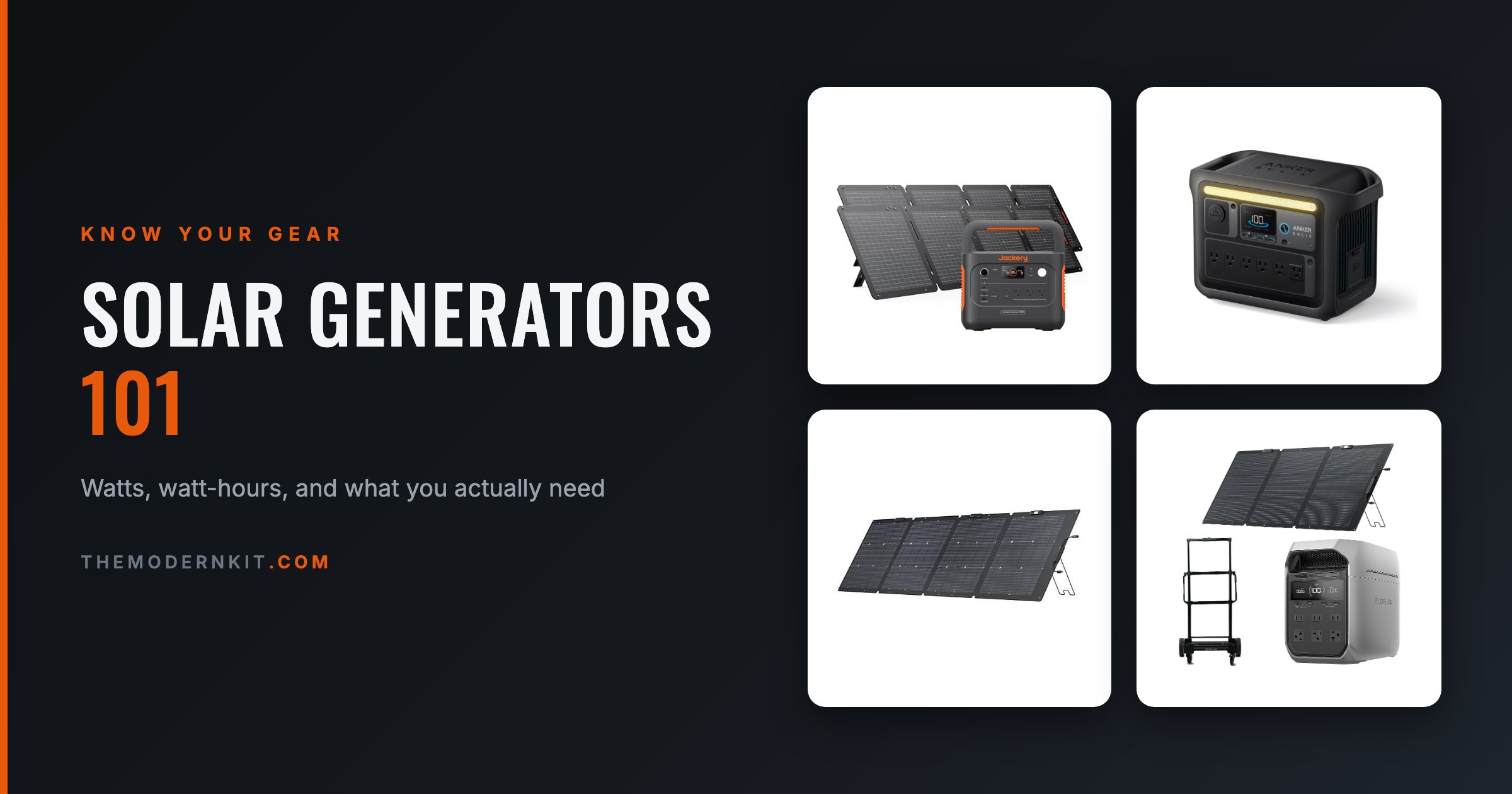
Quick answer: watts (W) measure how much power a station can deliver at once — what you can run. Watt-hours (Wh) measure how much energy it stores — how long you can run it. A phone needs ~10W; a fridge ~150W running; a space heater 1,500W. For most homes, a 1,000Wh station with a 1,500W+ inverter — like the Jackery 1000 v2 kit — is the sweet spot.
Watts: what you can run
The inverter’s continuous watt rating is a ceiling. Add up the running watts of everything you’ll plug in at once: LED lights (10W), laptop (65W), fridge (150W running, but 3–4× that for a second at compressor start — why surge ratings matter), microwave (1,000W), space heater (1,500W). A 2,000W-class station such as the Anker SOLIX C1000X covers everything short of central HVAC.
Watt-hours: how long you can run it
Divide capacity by load: a 1,000Wh battery runs a 150W fridge roughly 5–6 hours of compressor time — in practice a day of cycling — or charges a phone 50 times. Rule of thumb: 500Wh for a weekend of devices, 1,000Wh for outage essentials, 2,000Wh+ for multi-day backup with a fridge in the mix.
Solar input: the recharge math
Panels are rated in watts too, but real-world yield is 60–80% of the sticker in good sun. A 220W panel refills a 1,000Wh station in a bit over a full sunny day; doubling panels — not battery — is usually the cheapest way to more usable energy per day.
LiFePO4, cycles, and why chemistry matters
Modern stations use LiFePO4 (lithium iron phosphate) cells rated for 3,000+ charge cycles — a decade of heavy use — versus ~500–800 for the older NMC chemistry. Every pick we recommend is LiFePO4; don’t buy anything that isn’t in 2026.
The Bottom Line
Size the inverter to your biggest simultaneous load, the battery to how long you need to ride, and the panels to how fast you must refill. Most households land at 1,000Wh/1,500W with a 200W-class panel — the Jackery Solar Generator 1000 v2 bundle is exactly that math in one box.
Frequently Asked Questions
How many watt-hours do I need for a power outage?
For essentials — fridge cycling, phones, lights, router — plan on 1,000Wh per day. A 2,000Wh station covers a weekend outage comfortably if you skip heating appliances.
Can a solar generator run a refrigerator?
Yes — a full-size fridge draws about 150W running with brief compressor surges of 500–600W, well within any 1,000W+ station. A 1,000Wh battery keeps one cycling for roughly a day per charge.
What’s the difference between a solar generator and a power station?
Same device: a battery with an inverter and outlets. “Solar generator” just means it’s sold with (or marketed for) recharging from solar panels instead of only wall power.
This post contains affiliate links. If you buy through them, we may earn a small commission at no extra cost to you.